


Sectors in focus
Hybrid power platform - The advantage of integration
Sep 09, 2026Summary
A new model
The hybrid model is driven by the desire to:
- De-risk power cost and procurement.
- Reduce net import requirements.
- Move away from carbon offsetting in favor of carbon matching.
- Unlock new revenue streams, including unused battery storage capacity and heat offtakes.
But it is not a simple alternative to waiting in the grid queue. Structuring the model requires coordination across real estate, planning and zoning, energy regulation and project finance that goes well beyond a conventional power purchase agreement.
Co-located renewable generation
For co-located generation, complexity starts from the ground up. Developers must secure:
- Land capable of accommodating both data center infrastructure and utility-scale assets.
- Planning consents.
- Environmental impact mitigation.
- Grid connection risk management.
While long-term “private wire” PPAs are central to the model, it must align pricing, operational responsibilities and regulatory risks with each data center’s specific makeup. But private wire PPAs require careful drafting, particularly around change-in-law provisions, such as for the imposition of a new tax on private power generation.
Battery energy storage systems (BESS)
Where BESS are integrated, contractual frameworks need to balance operational resilience with revenue generation. Agreements need to govern:
- Capacity allocation.
- State-of-charge management.
- The interaction between resilience obligations and energy trading.
- Interface risks with system operators and licensed energy traders.
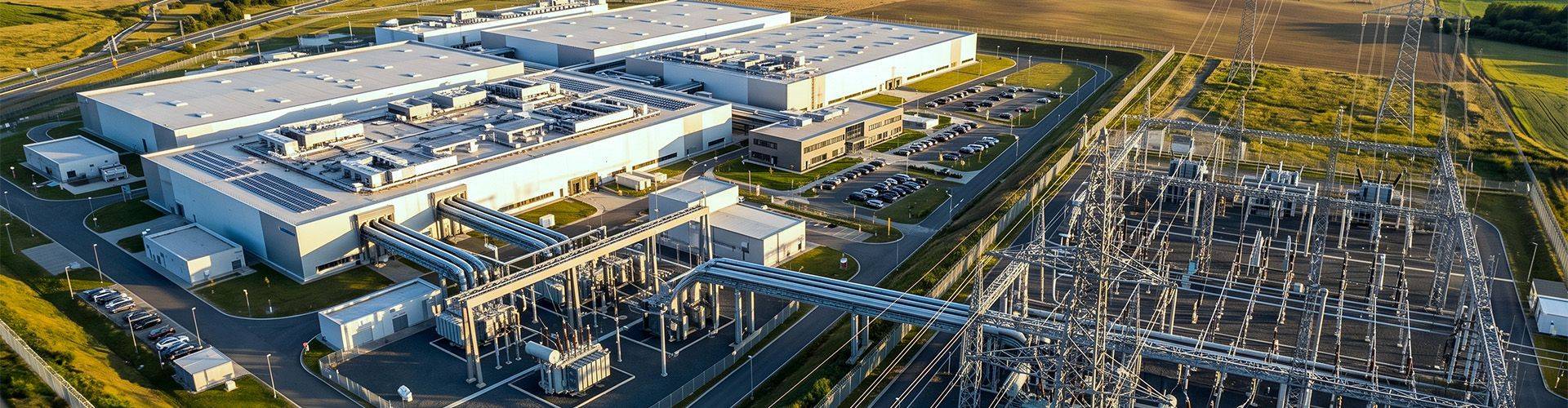
Nuclear
Some large-scale developments are also exploring nuclear solutions to achieve consistent baseload power. Future integration of Small Modular Reactors (SMRs) introduces further complexity, with projects facing:
- Evolving nuclear licensing regimes.
- Extensive planning approvals.
- Heightened security obligations.
- Nationally significant infrastructure requirements.
Structuring for exit
Structuring assets and power arrangements to support financing and exit flexibility also becomes a key legal consideration. Individual data centers within a campus should be ring-fenced so they can be sold individually, as an entire campus, or as part of a wider portfolio. The connection, PPA, private-wire and shared infrastructure documents must allow for this scenario.
Energy contracts and generation assets structured to allow a single hall or phase to be carved out, refinanced or sold without renegotiating the power arrangements of the rest of the campus offer far more flexibility than a single, campus-wide PPA or connection agreement that ties every phase together. Structuring in this way also materially eases the due diligence process for prospective lenders and buyers, who will otherwise need to unpick a single integrated power position to understand what they are actually acquiring.
How BCLP can support you across the data center lifecycle
We help clients compete where others can’t, bringing global insight to the legal challenges of next generation digital infrastructure. We understand the unique complexities and commercial drivers of the sector, and look at the whole asset, so you can maximize value. Our seamless coverage across real estate, planning, energy, construction, finance, tax, regulatory, data and disputes helps you connect the dots across the data center lifecycle.

Related capabilities
-
Data Centers